

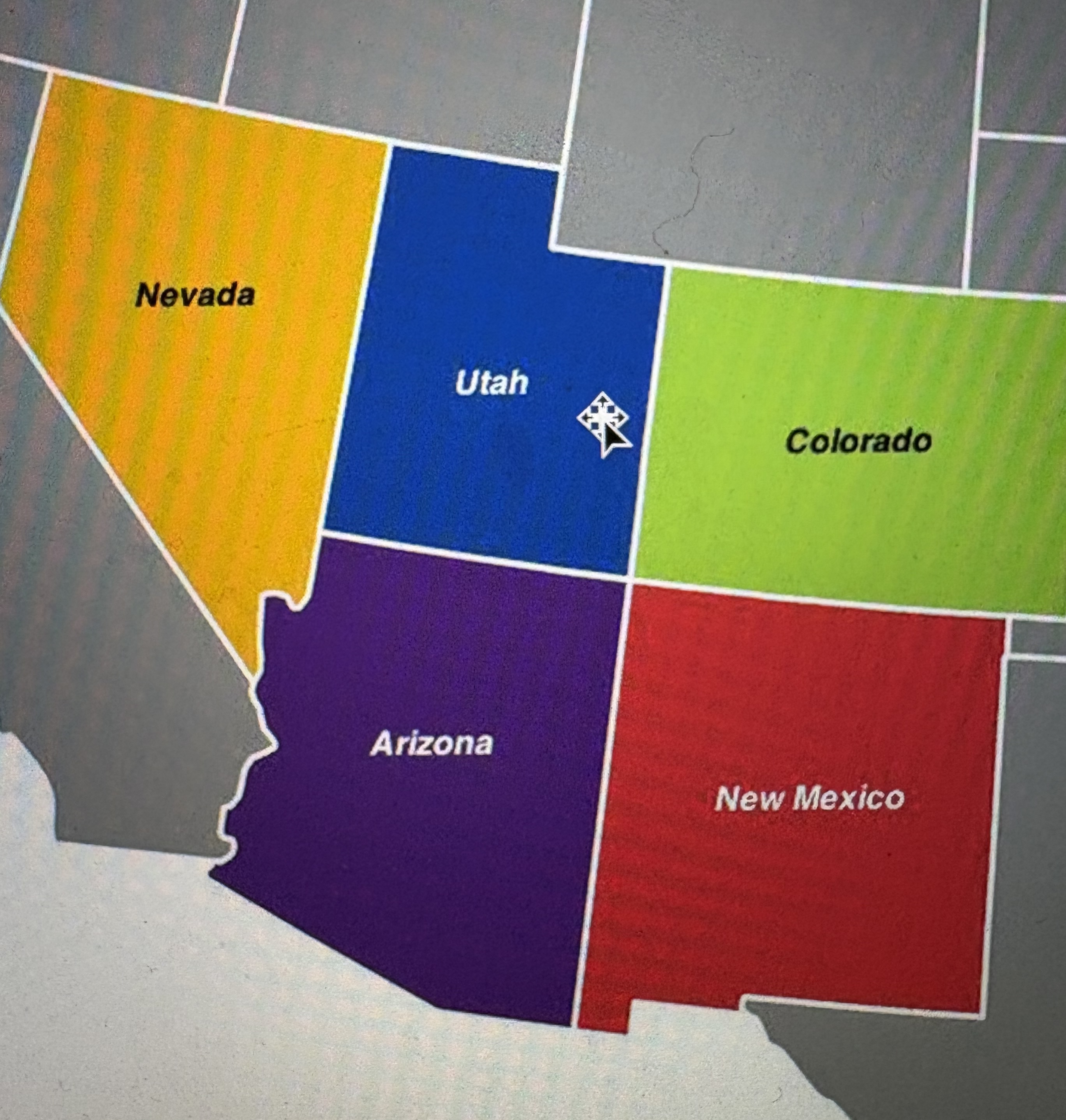
Yesterday I explored wine regions in the Midwest and today I want to continue with some of the other 22 states I have not yet mentioned starting with the southwest states of New Mexico, Nevada, Utah, Arizona, and Colorado. Arizona just like many other American states has a vibrant wine scene with three AVAs – Verde Valley, Wilcox, and Sonoita, each with their own microclimate and soils. The state uses many Vitis Vinifera grapes, particularly Cabernet Sauvignon, Syrah, and Zinfandel which adapt to the hot weather and cool desert nights. It is very different from the states I looked at yesterday with their cool climate American hybrid varieties.
Utah also part of the southwest with hot climes, is home to a number of wineries. They underscore the idea that Southern Utah is at the 37th parallel just like Spain, Italy, and Greece and therefore has some of the same attributes. They also note that the soils have lots of volcanic material and that the vineyards are at elevation. Diurnal temperature changes also provide respite for the grapes in the hot part of the States. Apparently wine grapes were first planted here in the 1850s and Brigham Young, founder of The Church of Jesus Christ Latter-day Saints (Mormons) helped to expand their growth as the wines were used in church functions. Later the temperance movement took over and wine was no longer a focus for that large part of the Urah population. That said, winemaking and grape growing have always had a place and today, there are a number of wineries growing grapes using vitis vinifera grapes such as Tempranillo, Sauvignon Blanc, Petite Sirah, and others. Many of the wineries are in the southern part of the state and are a good way to break up the hiking, biking, national park visiting tour.
Nevada, no stranger to travels and tourism has a number of wineries that can be part of your visit to the strip. Here, as in these other states, hot climes and diurnal temperature changes call for using grapes that can withstand these temperatures, such as Petite Sirah, Petit Verdot, and Chardonnay, among others. It’s striking to think that visiting wineries is now so common in the US that each state has a wine trail.
I have already written a lot about New Mexico and I included it in my original post about American wines a few days ago. It’s actually my favorite of these states and one I have visited a number of times. It’s long history is linked to Spanish missionaries and indigenous varieties. It’s a state in evolution and one I can’t wait to visit again.
The fifth states that I am writing Colorado which has a very active wine industry with Vitis Vinifera grapes growing, fruit wines being made, and French and American hybrids are grown too in order to deal with the cold temperatures and hot, short growing seasons. Colorado with its ski locations and hiking/biking trails is another example of a state where wine tourism is flourishing.
All of these states and their wine industries brings jobs, opportunities for agricultural products, and learning to so many people in addition to the pleasure they afford travels and local communities. I love that wine is now so ever present in the US and that it is part of local fun for so many. The future may be fewer people drinking wine in they way they did in the past but it is looking ever brighter as vineyards attract new kinds of visitors for a host of reasons in addition to what is in the glass. Wineries hosts events, concerts, fundraising initiatives, competitions, food festivals, and movie nights. I hope the next 50 years continue to see an evolution in the US wine industry.

