


Abruzzo is in the center of Italy. There are basically two types of typography in the area, mountains and the coastal areas. Grapes grow in the wide bands between the two. Abruzzo has some of the highest mountains in the Apennine mountain range, 65% of region is mountainous with the Gran Sasso d’Italia and the Majella Massif. In fact, there is no region in Europe like Abruzzo where more than 30% of the territory is protected by four parks (three national and one regional) and a dozen nature reserves and protected areas. That said, it also has coastal area with extensive hills.
About the climate:
The climate is mild on the Adriatic-facing side of the Apennines and more continental in the inland basins. There is good rainfall and high levels of sunlight combine to make an advantageous area for growing grapes. The imposing Gran Sasso and Majella massifs are located a short distance from the sea (30-40 minutes by car) and the diurnal temperature shifts taken together with good ventilation, ensure an ideal microclimate for the vines to grow and produce high-quality grapes.
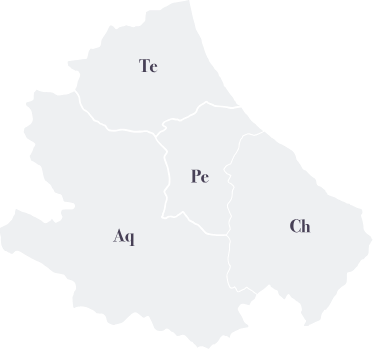
About the production areas which are concentrated almost entirely in the hills:
The Chieti province accounts for more than 75% of vineyards and 83% of production while Pescara and Teramo, each accounting for about 10% of the vineyards, and 10% and 6%, respectively of production. With regard to L’Aquila which has less than 4% of the vineyards, about 1% of production comes from the province of L’Aquila.
About the grapes:
While Montepulciano is the most widely planted grape in the region, Trebbiano is a close second with 12,000 hectares planted. Trebbiano does well in this very green region of Italy thanks to soils, the climate, and the grape’s adaptability.
Fun Facts about Trebbiano d’Abruzzo:
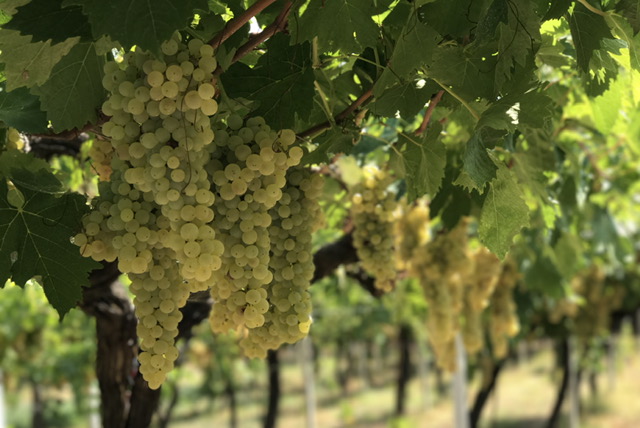
Evidence of the Trebbiano grape variety in Abruzzo dates back to the 16th century when Andrea Bacci, in his work “De naturali vinorum historia” pointed out the presence of a wine made from Trebulanum grapes in the Fucino and the Peligna areas. Trebbiano is a medium to late harvest grape, with grapes ripening approximately from 20 September to 10 October. It has great acidity, can be delicate and light but can also have complexity as well. Many use lees aging or barrel maturation to give it more texture. Some 192,000 hl of Trebbiano d”Abruzzo produced annually. Trebbiano d’Aburzzo DOC covers the same area as the Montepulciano DOC, not the Western hilly section of the region but the middle and coastal bands. Trebbiano d’Abruzzo DOC is made from Trebbiano d’Abruzzo and/or Trebbiano Toscano varieties with the help of other white grapes suitable for cultivation in the Abruzzo region, either alone or blended up to a maximum of 15%. The grapes used to make Trebbiano d’Abruzzo DOC grow in hilly or plateau soils, with an altitude not exceeding 500 meters above sea level and 600 meters if it has a southern expsure.
About the wines produced:
Wines made using the Trebbiano d’Abruzzo DOC denomination tend to use almost 100% Trebbiano d’Abruzzo but are allowed to use 15% Trebbiano Toscana. Generally, producers look to make a wine that is ready to consume the year it is harvested and ready for the market although I have had aged Trebbiano as well. Aromas on the nose are apples and yellow pear with floral notes of acacia white flowers. The wines have good acidity and length, medium alcohol, and tend to finish with a slight bitter note, typical of Italian white wines, really all Italian wines in my opinion. I think it’s a perfect sip for spring. New, lemon yellow in color, fresh, and lively – all signs of growth, hope, and good vibes for this beautiful season.
Older Trebbianos can of course take on more mature aromas and flavors, with more mature fruit and dried flower notes coming through but this is not typically what you will find on the shelves in a retail store. It’s the fresher versions that abound.

 avvinare.com