


The above image from the Consorzio Tutela Vini Oltrepò Pavese shows snow covered vines. I love this image of the vineyards in this part of Lombardy which is dear to my heart. While heavy snowfall can cause damage to some vines, during the month of January when the vines show little grow above ground, don’t assume they are sleeping. Vines are resting on the surface but underground their roots are doing hard work to store food that they will bring to bear in the spring. While the vines are resting, those who tend these fields are not. They are hard at work pruning the canes from last year, deciding how many shoots to leave on the cane, which canes to cut from last year and how the vineyard will grow. These phase of pruning, known in Italian as potatura is very import for the vineyard in the coming year. It will decide how many grape bunches they will grow, what the canopies will look like, and all of that eventually leads to what is in the glass.
At times, there is also cutting parts of infected grapevines to be done. Years ago I had the pleasure of translating from Italian into English a series of conversations with journalists for the famed team known as the Vine Master pruners or Simonit and Sirch. Marco and Paolo were amazing people to speak with and I learned so much that I will never forget our conversations about doing plant “surgery” to cure vines of infections. Someday I hope to be able to attend their pruning school academy. I have always hung onto the drawings Marco made of grape vines and the cuts he makes to help them grow and live long lives.
Other activities in the vineyard in Winter include putting down cover crops, straw, compost, or more earth to keep the vine roots warm and to build up the resilience of the soil by adding in nutrients. Many are also fixing the trellising posts and repairing other odds and ends in the fields, when possible. All of this is of course dependent on the weather.
While there is work to be done in the vineyard, there is also work to be done in the wineries. If wines are aged in oak barrels, the barrels often needed to be topped up because of evaporation. Much of that takes place during this time of year. Winemakers are also checking on grapes that are undergoing appassimento or withering or drying. This process usually takes place in special locations either known as a fruittaio, vinsantaio for vinsanto, or other names. Sometimes the grapes keep drying out longer, until February but winemakers need to check on the health of these grapes and what state they are in.
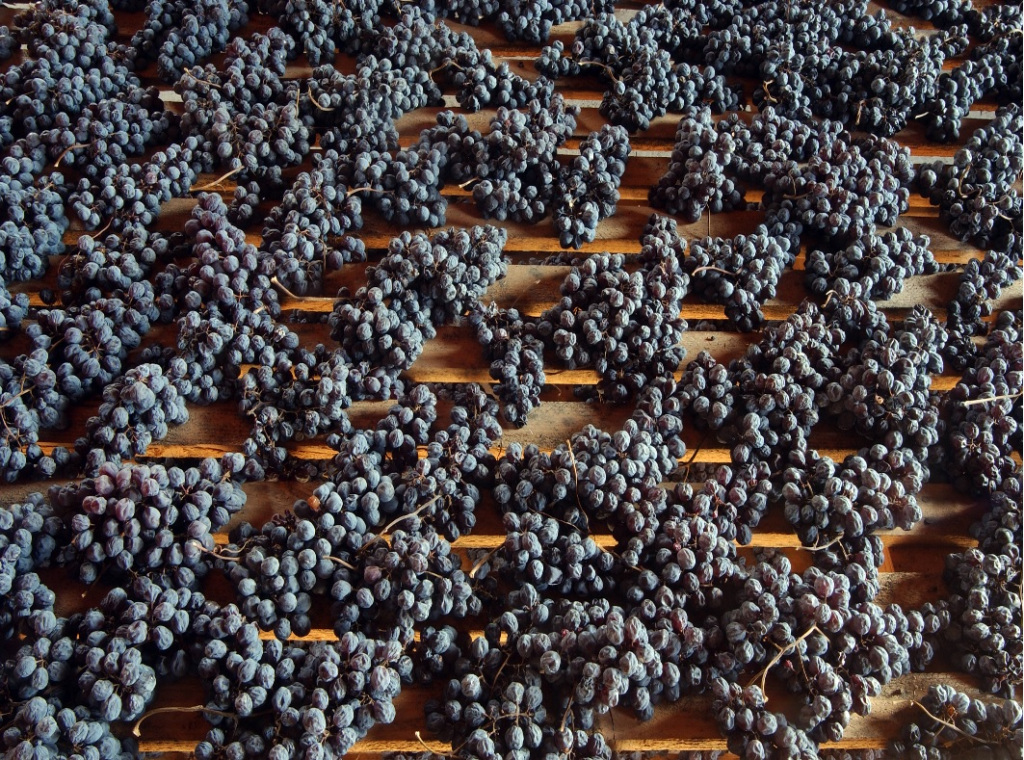
Why would someone use the appassimento technique you may wonder? When grapes dry, they loose a lot of their water and they become both more alcoholic and sweeter and more concentrated. When they are then used in a wine, such as Amarone, Sfursat, or other big red wines, the wine is bolder, bigger, and at times has a touch of sweetness to it as well. These wines are gorgeous with festive holiday meals such as those we just had, or with aged cheeses. Many dried grapes are used in passito wines or sweet wines.
Another item keeping winemakers busy this time of year can be the making of their blends which they may begin doing at this time of year. In sum, January and Winter is a time when a lot is happening in the vineyard and in the winery that might not be so obvious. It’s actually a good time to visit wineries since fewer people are about and winemakers have a bit more time to speak to you.

Two Italian terms I threw in here: Appassimento – drying of the grapes or withering of the grapes and Potatura – Pruning.
Here is how to pronounce both:
 avvinare.com